
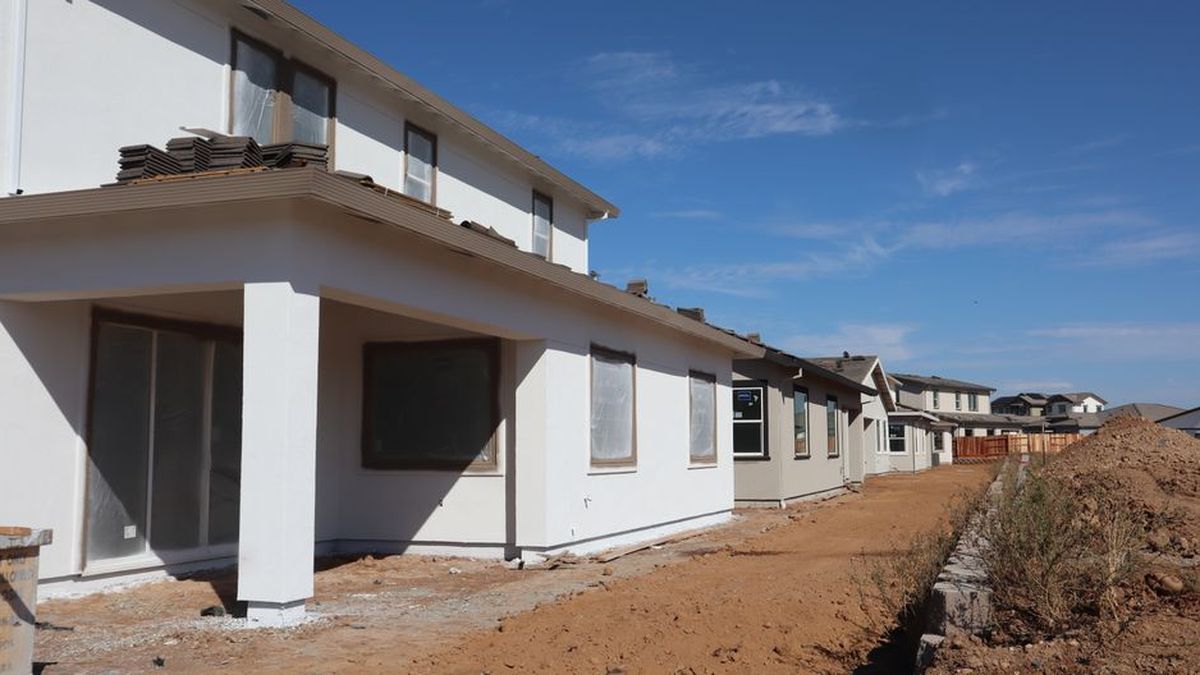
Building a home is the one purchase where the bank pays for something that does not exist yet. That is exactly why a construction loan behaves differently from the loan you would use to buy an established house.
Instead of settling one lump sum on one day, the lender releases your money in instalments as the builder finishes each stage, and you only pay interest on the part that has actually been drawn. That single mechanic explains almost every other rule attached to a construction loan australia wide.
For a house and land package, a knockdown rebuild or a major renovation, that staged structure changes your cash flow, your approval conditions and your timeline. Here is how it works in practice.
What Is a Construction Loan and How Is It Different?
A construction loan is a home loan designed to fund a build in stages rather than all at once. The approved limit covers the land (if you do not already own it) plus the contract price of the build, but the funds sit undrawn until your builder invoices for completed work.
- The total limit is approved upfront, so you know your ceiling before the slab goes down.
- Money is released in progress payments, each one triggered by a builder invoice.
- Interest is charged only on the balance drawn to date, not the full limit.
- Repayments are interest only through the build, then revert to principal and interest.
- The loan converts to a standard home loan once the final inspection is signed off.
For most borrowers this is still a mainstream product. Our home loan brokers in Melbourne see construction lending sit alongside ordinary purchases on the same lender panels, just with an extra layer of conditions attached.
How Does a Construction Loan Work Stage by Stage?
Lenders fund a build against a progress payment schedule written into your building contract. Westpac's own construction lending guide sets out a typical five stage schedule, and most lenders on our panel follow the same shape even though the wording varies slightly between contracts.
- Deposit or base — released against the signed contract so the builder can start.
- Slab — the concrete foundation is poured and cured.
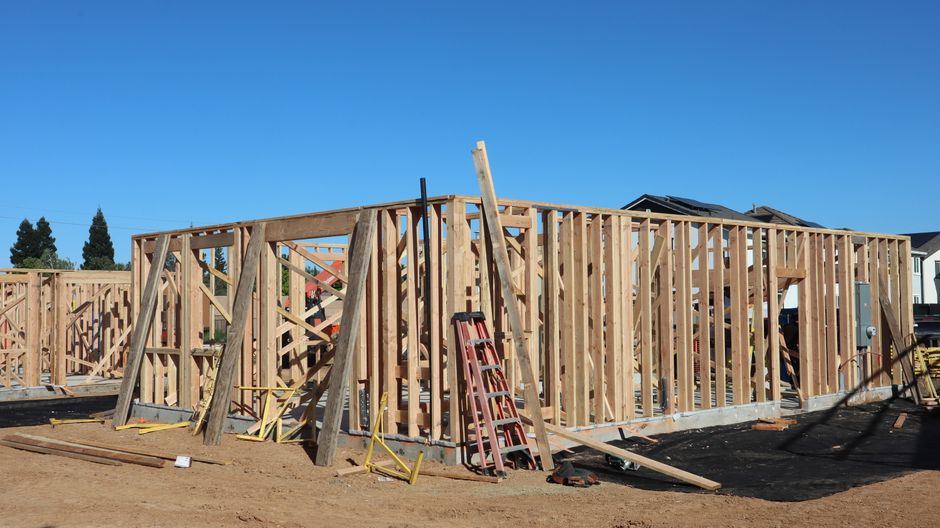
- Frame — the timber or steel skeleton is up and braced.
- Lockup — external walls, windows and doors are in, so the house can be locked.
- Fit out — internal fixtures, cabinetry, plaster and tiling go in.
- Completion — the final payment, released after a satisfactory final inspection.
| Stage | What the builder has finished | What the lender does |
|---|---|---|
| Slab | Foundation poured | Checks invoice, may inspect |
| Frame | Structural frame erected | Releases next draw |
| Lockup | Windows and doors fitted | Valuer may re-inspect |
| Fit out | Internal fixtures installed | Releases draw on invoice |
| Completion | Build finished and cleaned | Final inspection then final draw |
Each draw is a small approval of its own. The builder invoices, you authorise the payment, and the lender pays the builder directly rather than depositing the money into your account.
What Can You Borrow Against When the House Does Not Exist Yet?
This is the part that surprises first time builders. The lender does not value a vacant block and a stack of plans; it instructs a registered valuer to assess what the finished property will be worth once built to the approved plans, commonly described as an "as if complete" valuation.
- The valuer works from your council approved plans, specifications and the signed building contract.
- If the as if complete figure comes in under the contract price, your contribution has to cover the gap.
- Upgrades agreed with the builder after the valuation are usually not funded by the loan.
- A lender nominated valuer may also re-inspect at later stages before releasing funds.
- The final progress payment can be held until that final inspection is satisfactory.
How Is Interest Charged During the Build?
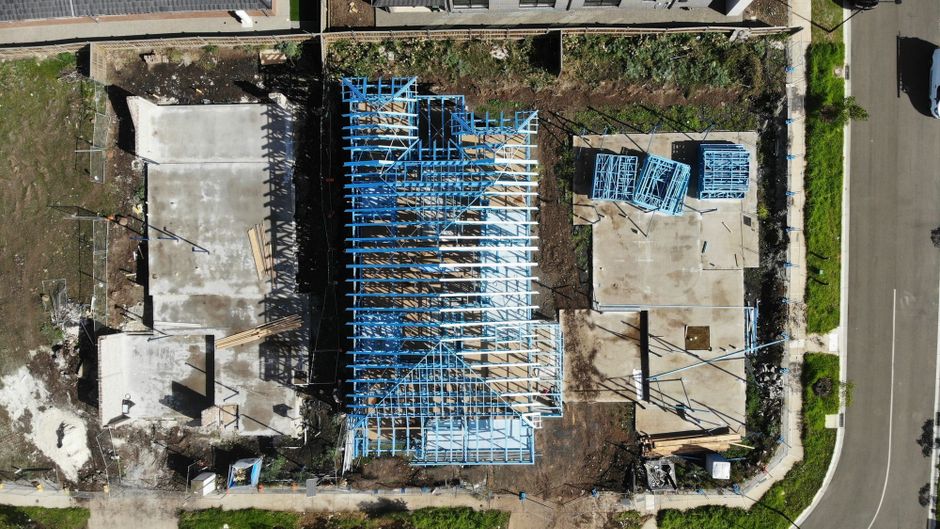
Interest accrues only on the funds already released, which is why the first few months of a build feel cheap and the last few do not. A borrower who has drawn only the slab payment is paying interest on that slice alone.
- Repayments start small and step up with each progress draw.
- Most lenders set the construction period as interest only, easing cash flow while you may also be paying rent.
- Once the build finishes the loan rolls into principal and interest for the remaining term.
- Build delays extend the interest only window, which lenders treat as a credit risk, not a formality.
- Lenders assess your repayments at a buffer, not the rate you are quoted.
That buffer matters. APRA requires lenders to test new borrowers at an interest rate at least 3 percentage points above the loan product rate, so the repayment you are assessed on is always higher than the one you will actually make.
How Does a Construction Loan Compare With a Standard Home Loan?
When people search construction loan vs home loan, what they usually want to know is which parts of the process change. The credit assessment is broadly the same; the funding mechanics and the conditions are not.
| Feature | Construction loan | Standard home loan |
|---|---|---|
| Funds released | In staged progress draws | One settlement |
| Interest charged on | Amount drawn so far | Full balance |
| Repayments during term | Interest only while building | Principal and interest |
| Valuation basis | As if complete | Current market value |
| Extra conditions | Builder, contract, inspections | Standard verification |
- Your borrowing capacity is assessed the same way as any other home loan application.
- The approval is conditional on the builder and the contract, not only on you.
- Timelines are longer because each draw needs documentation.
- Switching lenders mid build is difficult, so the lender choice matters more than usual.
What Does an Owner Builder Construction Loan Involve?
An owner builder construction loan is where you, rather than a licensed builder, manage the project. Lenders treat these applications far more cautiously because there is no fixed price contract and no registered builder standing behind the work.
- Far fewer lenders will consider owner builder applications at all.
- You will generally need your owner builder permit and detailed costings before anything is assessed.
- Lenders often want evidence of relevant trade or project management experience.
- Expect tighter conditions on how and when funds are released.
- Some lenders fund materials and trade invoices only, not your own labour.
If you are self employed and building at the same time, the two sets of conditions stack. Our self employed home loan broker page explains how income is assessed when the paperwork is not a simple payslip.

What Paperwork Do Lenders Ask For?
Construction approvals fail on documentation more often than on income. Getting the pack together before you apply is the single biggest time saver.
- Council approved plans and specifications for the build.
- A signed and dated building contract with the progress payment schedule.
- Builder's risk and public liability insurance details.
- Contractor quotes for anything outside the main contract.
- The usual income, identification and liability verification any home loan requires.
Anything excluded from the contract, such as landscaping, driveways, fencing or window coverings, needs its own quote or its own funding plan. Those exclusions are the most common reason a build runs out of money before it runs out of work.
What We See Most Often on Melbourne Builds
Across the builds we have walked clients through, two patterns repeat. The first is a valuation shortfall on house and land packages where the land settles months before the build contract is finalised and the market has moved underneath it. The second is cost creep from items the client assumed were in the contract.
- Confirm what is excluded from the contract in writing before you sign.
- Keep a contingency outside the loan for exclusions and variations.
- Expect the land to settle first and the build draws to start afterwards.
- Tell your broker early if the builder changes, because it can require reassessment.
Because we compare 30+ lenders, we can see which ones are comfortable with a particular builder, a particular contract structure or a longer construction window before an application is lodged. If you are building your first home, our first home buyer mortgage broker page covers how the schemes interact with a new build.
How Do You Choose Between Construction Loan Interest Rate Offers?
A construction loan interest rate is only one part of the comparison, and on a staged product it is often not the part that costs you the most. The conditions around the draws can matter more than a small rate difference.
- Compare the comparison rate, not only the headline rate, as ASIC's MoneySmart guidance recommends.
- Ask how long the approved construction period runs and what happens if the build overruns.
- Check whether progress draw administration charges apply and how often.
- Ask whether the loan converts automatically to principal and interest or needs a new application.
- Confirm whether an offset or redraw facility is available after completion.
Our construction loan broker service exists for exactly this comparison: lining up the lenders that will accept your builder and your contract, then sorting them on cost and flexibility rather than on advertising.
This article is general information only and does not take your personal circumstances into account. Spotto Finance holds an Australian Credit Licence (CRN 564353). Consider seeking advice from a licensed credit adviser before acting.
Sources: APRA update on macroprudential settings, Westpac construction loan guide and ASIC MoneySmart home loans.
Frequently asked questions
How long does a construction loan last?
The construction period is set by your lender and written into the approval, and the loan converts to a standard home loan once the final inspection is signed off. Ask what happens if the build runs past that window, because an extension is a credit decision.
Do you pay interest on the whole loan while building?
No. Interest is charged only on the funds released to date, so repayments start small after the first progress draw and step up as each later stage is paid. Once the build is complete the full balance is on repayment as a normal principal and interest home loan.
Can you get a construction loan without a builder?
That is an owner builder construction loan and far fewer lenders will consider one. You would generally need your owner builder permit, detailed costings and evidence of relevant experience, and the conditions on how funds are released are tighter than with a licensed builder on a fixed contract.
What happens if the valuation comes in under the contract price?
The lender lends against its as if complete valuation, so any shortfall between that figure and the contract price has to be covered by you. Finding this early is why the valuation is ordered before you commit, not after.
Are landscaping and driveways covered by a construction loan?
Only if they sit inside the building contract. Items excluded from the contract such as landscaping, driveways, fencing and window coverings usually need their own quote or their own funding, and they are a common reason a build runs short of money.
Can you refinance a construction loan during the build?
It is difficult. Most lenders will not take over a part built project, so you are generally committed to your original lender until the build is finished and the loan has converted. That is why the lender choice at the start carries more weight than on an ordinary purchase.
Does a construction loan need a bigger deposit?
Deposit requirements vary by lender and by whether a licensed builder or an owner builder manages the project, so there is no single figure. A broker can tell you what each lender would want before you lodge.